
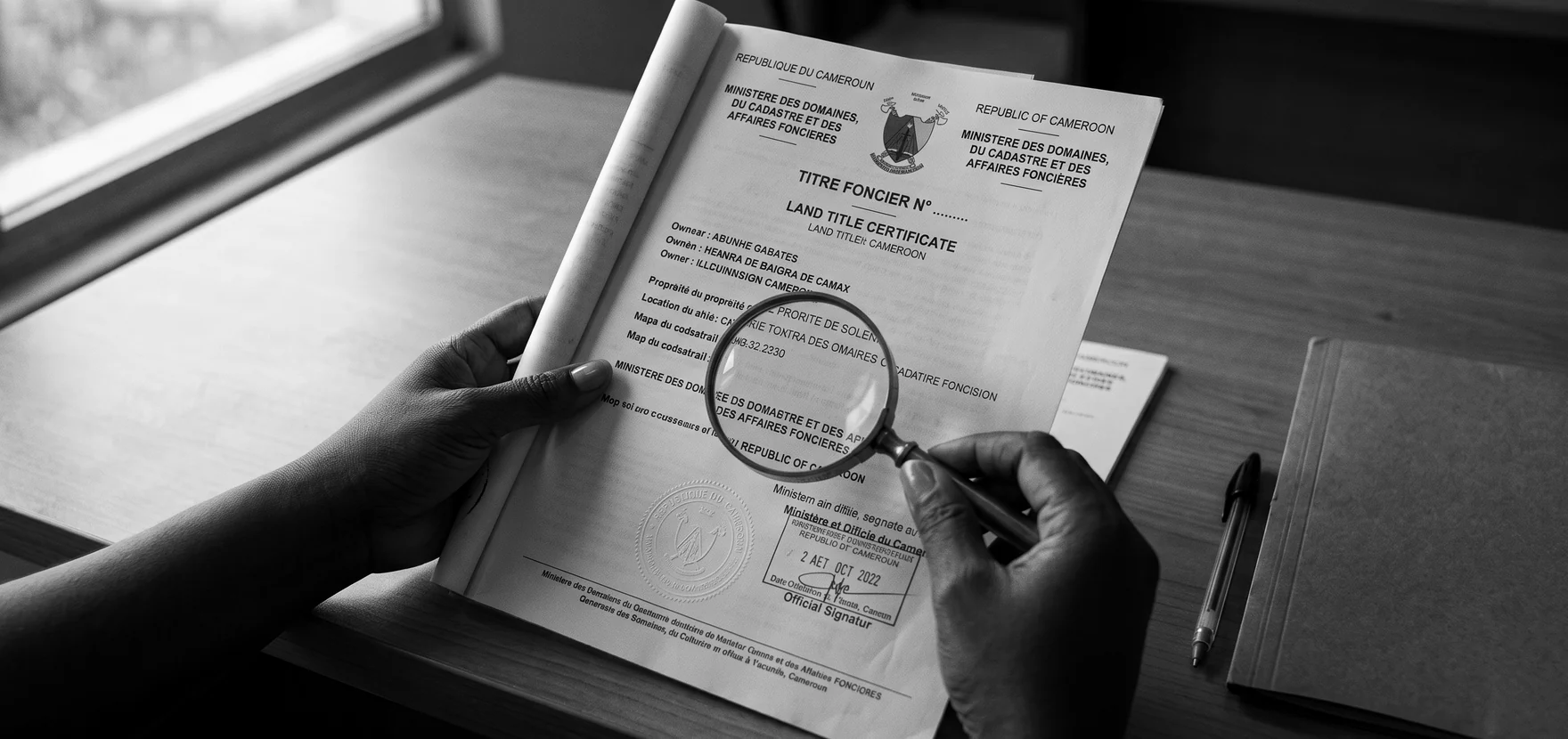
The land title, and nothing else
The land title (T.F.) is the only document proving that a person owns a piece of land, definitively and against all comers. It is issued by the Land Registry (Conservation Foncière), carries a number (for example “T.F. no. 4109/Mf”) and the name of the holder.
What does not replace a land title:
- a sale attestation or a private sale agreement;
- a “customary sale deed” signed before a chief or witnesses;
- a certificate waiving customary rights;
- a simple boundary-survey receipt.
These documents may appear in a file — but they are only steps along the way. Without a land title at the end of it, you hold nothing solid.
The three checks to make
1. The title exists and is in the seller’s name
Ask for the T.F. number and a copy. The name on the title must be exactly that of the person selling to you — or that of the company, with a clearly identified representative. If the seller says “it is my uncle’s land, the family’s land”, stop there until that is settled.
2. The title can be verified at the Land Registry
You can request a statement of real rights (état des droits réels): that document says who owns the land today, and whether it carries a mortgage, a seizure or a dispute. It costs money, it takes a few days, and it is worth every franc.
3. The land you are shown is the land on the title
A title may cover a large area of which you are being sold a piece (a “morcellement”, a partition). In that case a new title is needed for your specific plot, or at the very least a partition in progress with a survey plan stamped by the cadastral service.
The warning signs
- The seller refuses to give the title number or a copy “until you are serious”.
- You are rushed: “offer valid today”, “someone else is interested”.
- The price is far below the market.
- You are asked to pay into a personal account or Mobile Money number.
- The same land is offered by several middlemen at different prices.